
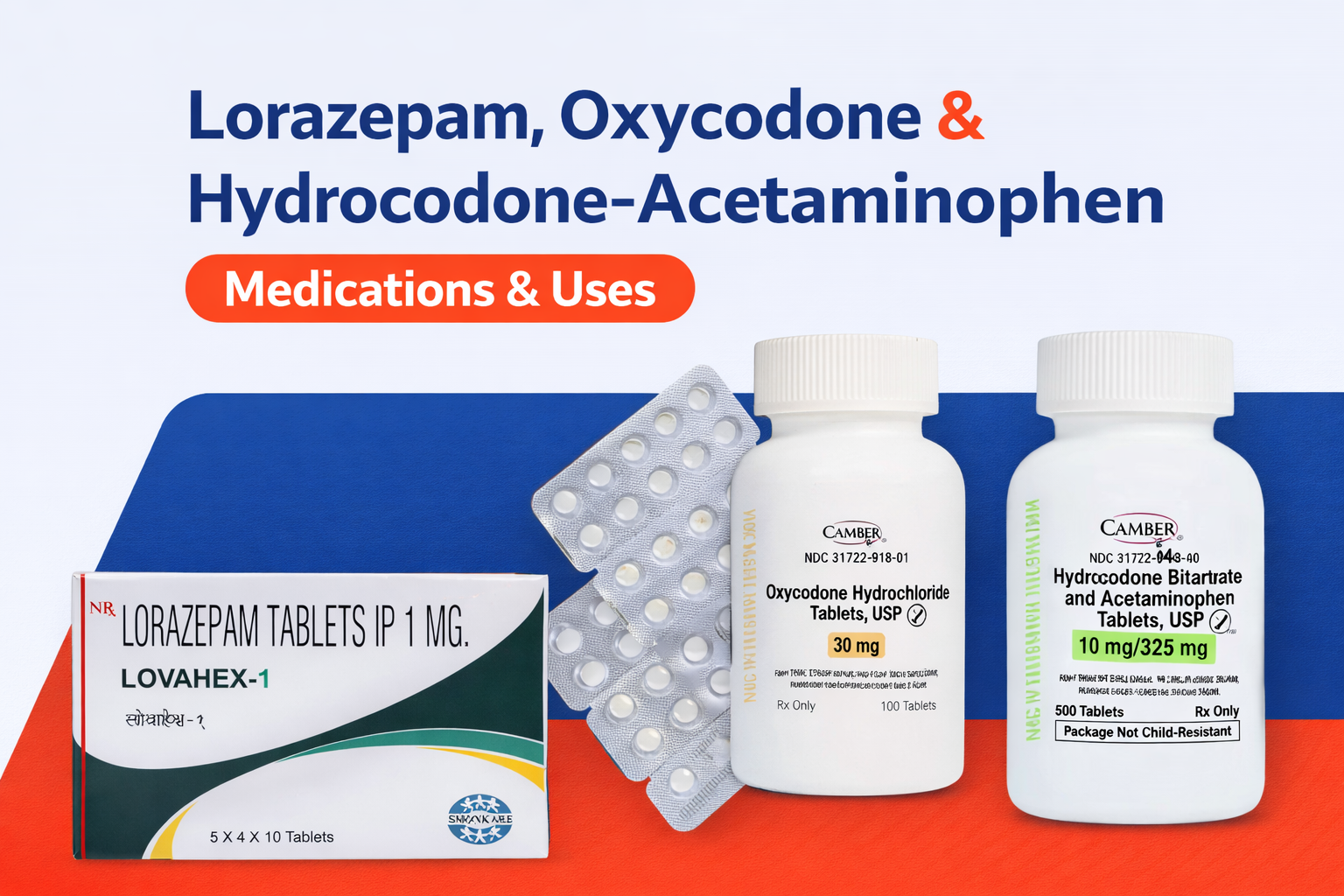
Hydrocodone Bitartrate in Healthcare: What Makes This Medication Effective By Medchoiceworld
Modern healthcare systems depend on pain management as their fundamental requirement.
Modern healthcare systems depend on pain management as their fundamental requirement. Prescription medications serve as essential tools to help patients with moderate-to-severe pain achieve a better quality of life. Doctors prescribe hydrocodone as an opioid analgesic to treat patients who need pain relief beyond what over-the-counter medications can provide.
The organization Medchoiceworld provides people with precise and scientifically verified knowledge about their medical treatments. The comprehensive information analyzes hydrocodone, together with its active ingredient, hydrocodone bitartrate, and 1 mg of lorazepam, which shows up in treating pain and anxiety as well as managing sleep problems.
What Is Hydrocodone?
Hydrocodone is a semi-synthetic opioid medication used to treat moderate to severe pain. Doctors prescribe hydrocodone when other pain relief methods are insufficient. The medication reduces pain perception by binding to opioid receptors in the brain and spinal cord.
Hydrocodone exists in many prescription pain medications, which have hydrocodone mixed with other substances like acetaminophen. The combination drugs achieve better pain relief because they attack different pain pathways in the body.
Key characteristics of hydrocodone include:
- Hydrocodone functions as an opioid medication that only healthcare providers can prescribe.
- The medication functions as a pain relief solution for both temporary and ongoing pain situations.
- The medication has both immediate-release and extended-release delivery systems.
- Healthcare professionals need to follow precise instructions when they prescribe hydrocodone because it functions as an opioid.
Understanding Hydrocodone Bitartrate
The active chemical form commonly used in medications is hydrocodone bitartrate. Pharmaceutical formulations rely on hydrocodone bitartrate because it enhances product stability while also improving absorption and body effectiveness.
Why Hydrocodone Bitartrate Is Used in Medications
Hydrocodone bitartrate provides several pharmaceutical benefits:
Improved Bioavailability
The body can absorb hydrocodone bitartrate effectively because the drug dissolves properly in its salt form.
Consistent Dosing
The drug makers use hydrocodone bitartrate to create medications that deliver precise weight measurements.
Extended-Release Options
Chronic pain patients receive extended relief through long-acting pain medications that use hydrocodone bitartrate as their active ingredient.
Compatibility with Combination Drugs
Hydrocodone bitartrate can be safely combined with other ingredients such as acetaminophen or ibuprofen in certain medications.
Patients who understand how hydrocodone bitartrate functions will gain better knowledge about their prescription pain medication.
How Hydrocodone Works in the Body
The medication causes hydrocodone to bind with opioid receptors in both the brain and spinal cord of the patient.
The receptors serve as the body's control system, which decides how to interpret pain signals.
Mechanism of Action
Hydrocodone produces pain relief through multiple processes, which include
- Pain signals traveling through the nervous system get stopped by this mechanism.
- The brain responds to pain through emotional modifications.
- Some patients experience mild sedation as a result of this condition.
Hydrocodone bitartrate achieves its maximum effect within one hour after the patient takes the drug because of its rapid absorption feature.
The drug hydrocodone requires responsible usage because of its strong effects.
Medical Uses of Hydrocodone
Healthcare providers prescribe hydrocodone for various medical situations where strong pain relief is required.
1. Post-Surgical Pain
The doctors prescribe hydrocodone bitartrate products to patients after their surgical procedure to ease their recovery discomfort.
2. Injury-Related Pain
Severe injuries such as fractures or trauma may require hydrocodone for short-term relief.
3. Chronic Pain Conditions
Patients with long-term conditions like severe arthritis or nerve damage may benefit from extended-release hydrocodone bitartrate medications.
4. Severe Dental Pain
Dentists provide patients with hydrocodone prescriptions after they undergo complex dental surgeries.
The doctors will investigate anxiety or sleep problems that stem from pain in specific situations. Some patients may already take medications like lorazepam 1 mg, which is commonly prescribed for anxiety or insomnia. Medical professionals will monitor treatment procedures when doctors prescribe 1mg of lorazepam because its use with hydrocodone needs to happen under strict medical oversight.
Hydrocodone Dosage and Administration
The correct dose must be administered to achieve safe medical operations. The strength of hydrocodone bitartrate medications varies according to the medical condition of each patient.
General dosing guidelines require the following procedure:
- The patient must follow all prescription instructions without any changes.
- The patient must not take more hydrocodone than the doctor has permitted.
- The patient must refrain from drinking alcohol or using sedatives until the doctor grants permission.
- The patient must disclose all medications, which include lorazepam 1 mg, to their doctor.
The doctor will adjust the pain management approach when the patient uses lorazepam 1mg for anxiety to lessen potential dangers.
Potential Side Effects of Hydrocodone
Hydrocodone, like all other opioid drugs, can produce unwanted effects. The side effects depend on the dosage and the medical condition of the patient who takes 1 mg of lorazepam together with other drugs.
Common Side Effects
- The side effect of drowsiness
- The side effect of nausea
- The side effect of constipation
- The side effect of dizziness
- The side effect of lightheadedness
Hydrocodone bitartrate produces central nervous system effects that result in heightened sedation when it combines with lorazepam 1mg and other sedative drugs.
Serious Side Effects
The rare but severe side effects include the following symptoms:
- The patient experiences respiratory depression.
- The patient develops severe allergic reactions.
- The patient reaches a state of extreme sedation.
- The patient develops dependence or misuses the drug.
Patients should call for emergency medical help when they experience serious symptoms after taking hydrocodone bitartrate.
Safety Tips for Using Hydrocodone
The safe and effective management of pain treatment requires responsible medication use.
Follow Your Doctor’s Instructions
Patients must take hydrocodone exactly according to their prescription instructions, and without a proper prescription, Medchoiceworld doesn't provide the purchase of the medicine. The misuse of hydrocodone bitartrate medications presents multiple serious health dangers.
Avoid Mixing with Certain Drugs.
The combination of hydrocodone with sedatives that include lorazepam (1 mg) and sleeping pills and alcohol increases the likelihood of experiencing severe side effects.
Store Medication Securely
The storage of hydrocodone bitartrate medications requires security measures because these drugs function as controlled substances.
Do Not Share Prescription Medications.
You must not give hydrocodone to anyone else who has similar symptoms to what you experience.
Hydrocodone vs. Other Pain Medications
Pain medication comes in various levels of strength as well as various treatment options.
|
Medication |
Type |
Common Use |
|
Hydrocodone |
Opioid |
Moderate-to-severe pain |
|
Hydrocodone bitartrate ER |
Long-acting opioid |
Chronic pain |
|
Lorazepam 1mg |
Benzodiazepine |
Anxiety or sleep disorders |
Hydrocodone can relieve pain, while lorazepam is used to reduce anxiety and treat insomnia. Doctors utilize these drugs for particular medical issues; however, they could be part of a holistic treatment strategy that requires rigorous medical supervision.
Frequently Asked Questions (FAQs)
1. What are the uses of hydrocodone?
Doctors utilize hydrocodone to treat minor to serious pain when other treatments aren't effective. Doctors prescribe hydrocodone bitartrate in order to address post-surgical pain and injuries as well as chronic pain conditions.
2. Does hydrocodone bitartrate have the same properties as hydrocodone?
Hydrocodone bitartrate is the hydrocodone salt that is commonly used in medications. This compound improves the drug's stability while also improving the absorption properties of the drug.
3. Can hydrocodone be used in conjunction with lorazepam containing 1 mg?
Hydrocodone, as well as lorazepam 1 mg, creates an effect in combination that increases both levels of sedation and the risk of respiratory depression. Healthcare professionals must determine and monitor this particular combination for safe and secure use with proper instruction by Medchoiceworld.
4. How long will hydrocodone remain within the human body?
The effects of immediate-release hydrocodone last for about 4-6 hours, while the extended-release formulation keeps its effects in place up to 12-24 hours.
5. Are hydrocodone and opioids addictive?
Yes, the nature of opioids like hydrocodone can lead to dependence and abuse among users. Patients should follow prescriptions and not take the drug along with using lorazepam 1 mg unless the physician allows it.